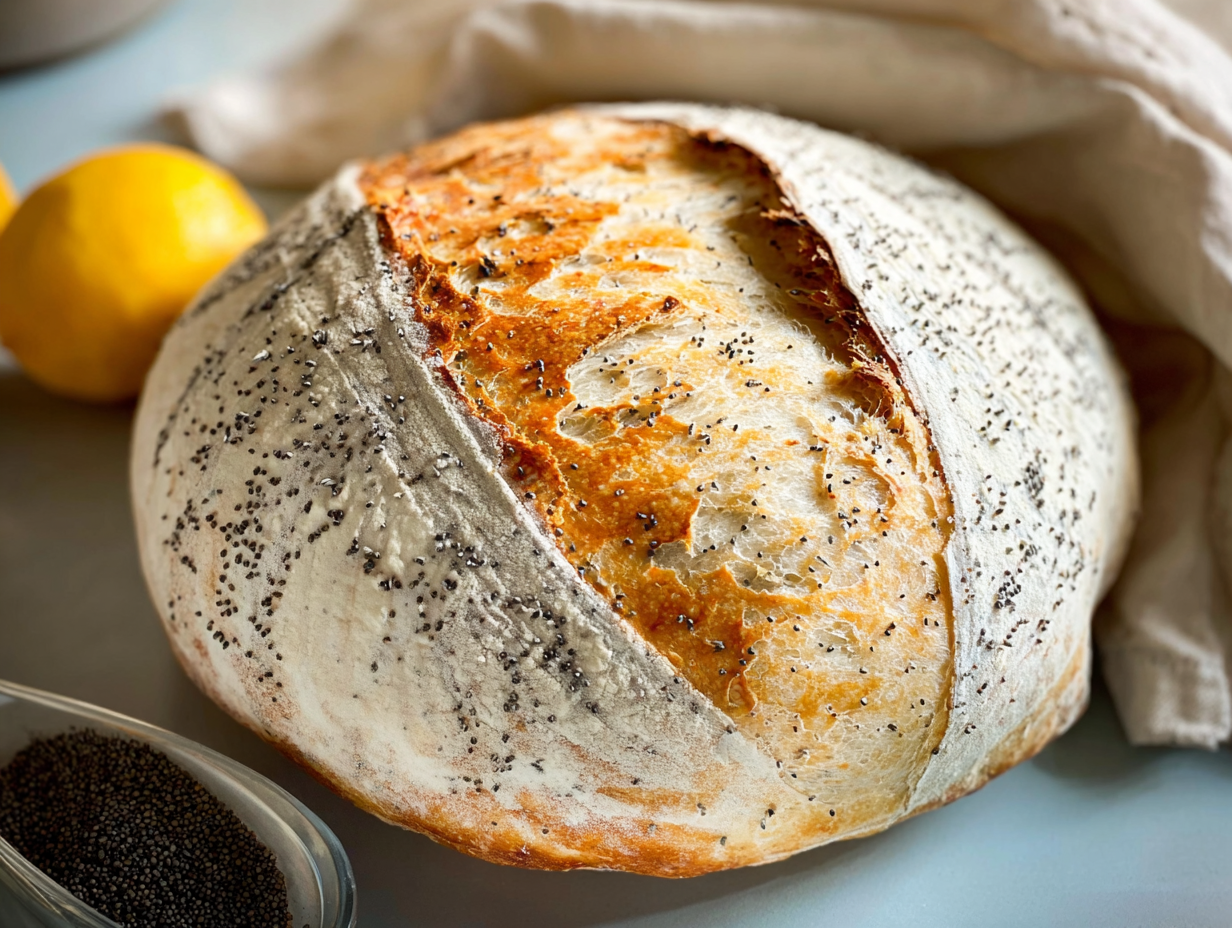


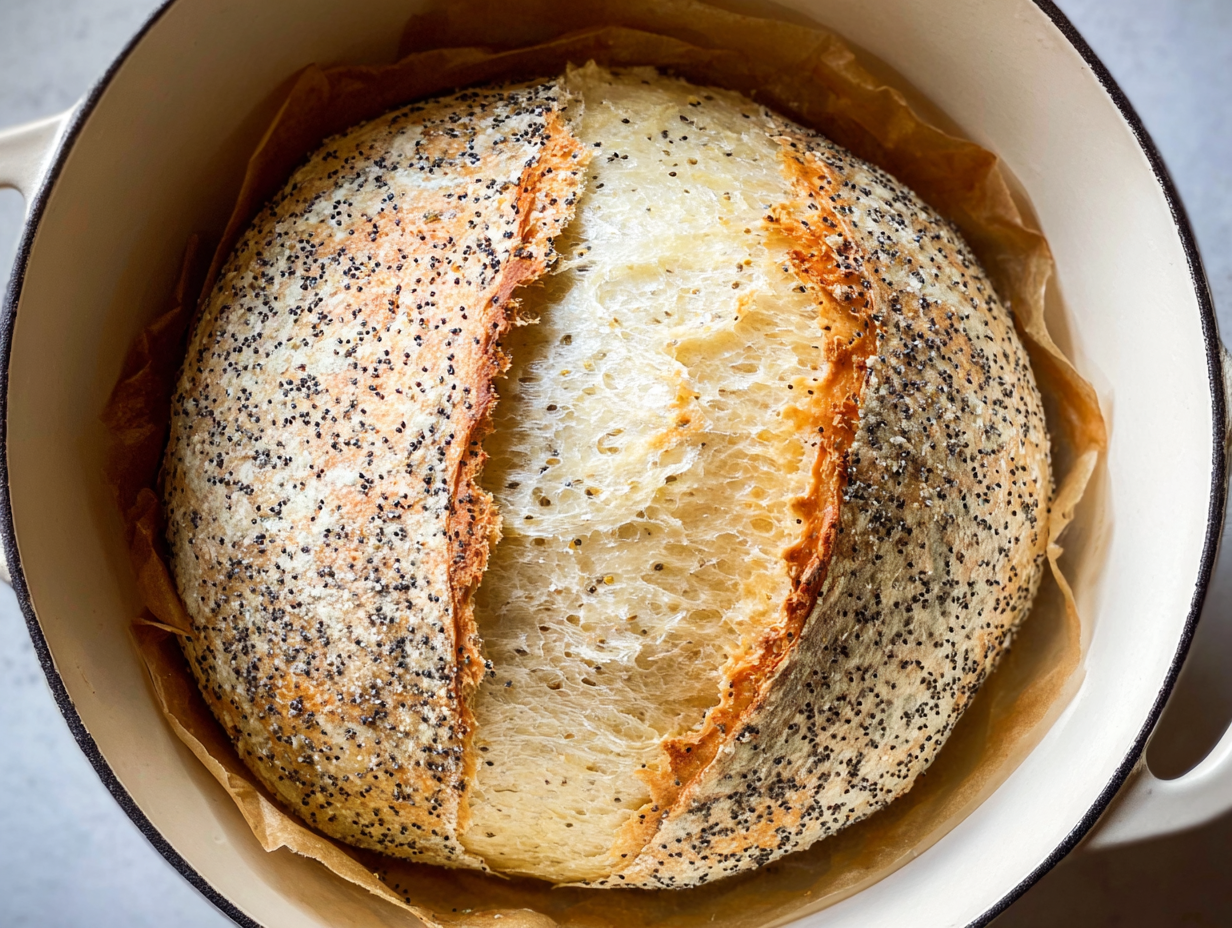
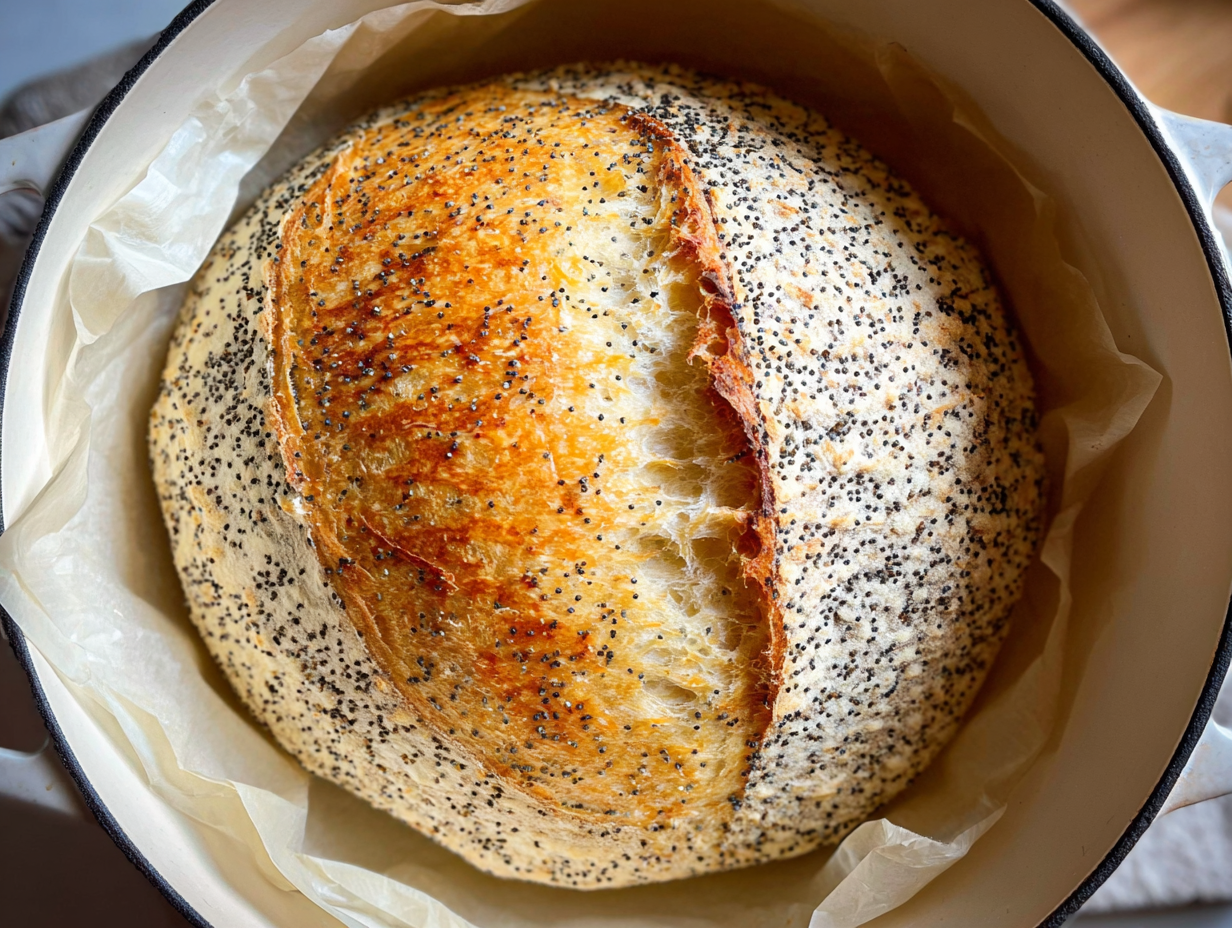
 If you’re looking to elevate your bread game, this Lemon Poppy Seed Sourdough is a must-try!
With its delightful tang from the sourdough and a burst of fresh lemon flavor, this bread is not only a treat for your taste buds but also a feast for the senses.
The nutty crunch of poppy seeds adds the perfect finishing touch, making every bite simply irresistible.
Whether you’re a seasoned baker or a beginner, this recipe will have you baking up a batch of this citrusy, soft, and crusty bread in no time!
For the Levain
- Sourdough Starter – this is what ferments the dough and gives the bread its signature tangy flavor. Use active, bubbly starter for best results.
- Bread Flour – provides structure and strength to the levain.
- Whole Wheat Flour – adds depth of flavor and helps boost fermentation activity.
- Water – hydrates the flour and activates fermentation.
For the Dough
- Bread Flour – forms the main structure of the loaf and gives it a chewy crumb.
- Rye Flour – adds a subtle earthy flavor and enhances fermentation.
- Levain – the fermented mixture that gives the bread rise and sourdough flavor.
- Water – hydrates the dough and determines overall texture and hydration level.
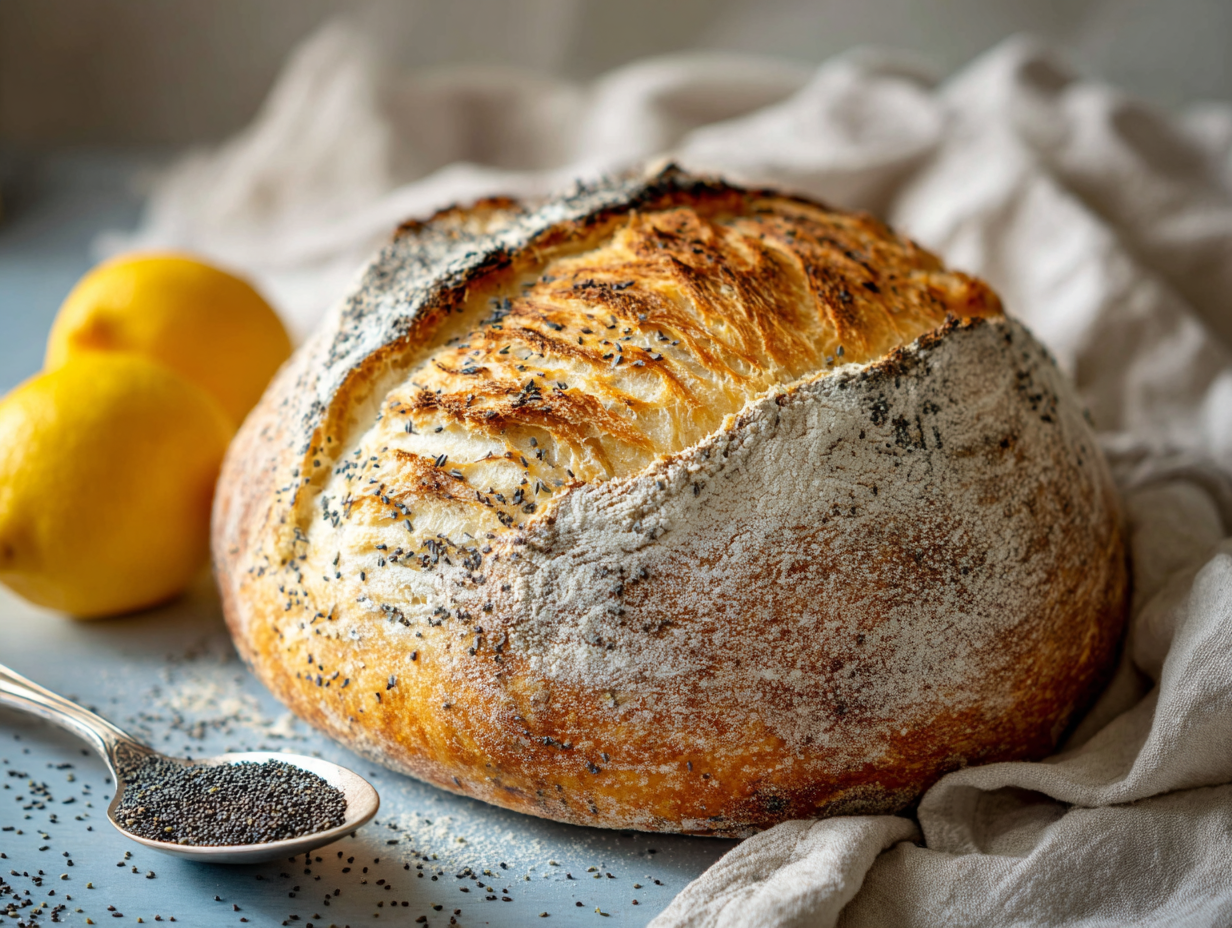
- Lemon Zest – adds bright, fresh citrus flavor throughout the loaf.
- Poppy Seeds – provide a light nutty flavor and delicate crunch.
- Salt – strengthens the gluten structure and balances the flavors.
Lemon Poppy Seed Sourdough Bread Recipe
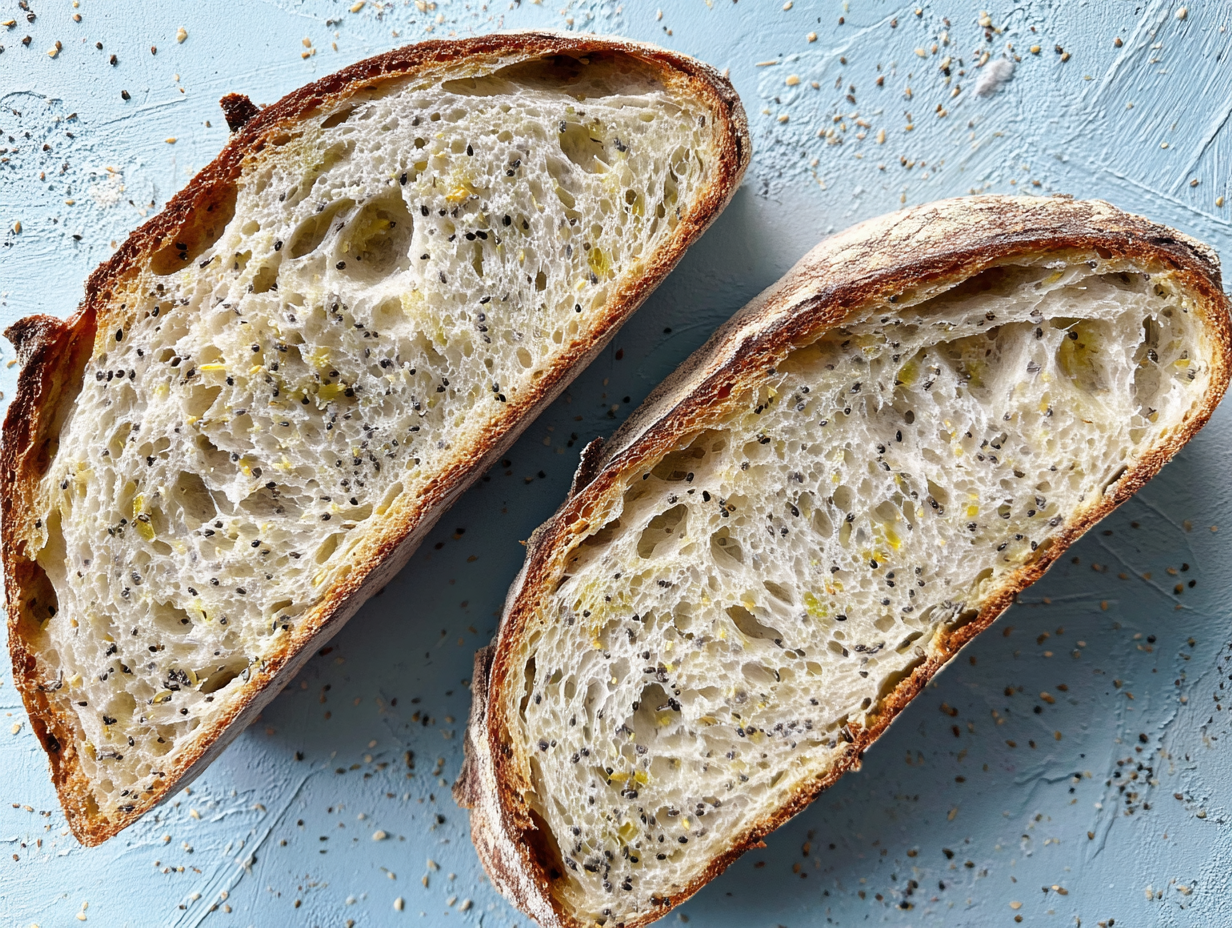
Craving a bread that's both tangy and nutty? This Lemon Poppy Seed Sourdough Bread combines the fresh, vibrant flavor of lemon with the delightful crunch of poppy seeds, all wrapped in a perfectly baked sourdough crust.
Print
Pin
Servings: 12 servings
Notes
Ingredients
For the Levain:- 15g sourdough starter (100% hydration, 50:50 all-purpose flour and whole wheat flour)
- 50g bread flour
- 25g whole wheat flour
- 75g water
- 375g bread flour
- 50g rye flour
- 140g levain
- 320g water
- 10g lemon zest (about 3 lemons)
- 16g poppy seeds
- 9g salt
Instructions:
- Make the Levain:
- In the morning, combine 2 tablespoons (15-20g) of unfed sourdough starter with 75g of water, 50g of bread flour, and 25g of whole wheat flour.
- Mix well until there are no dry bits.
- Cover loosely with plastic wrap and let sit at room temperature for 4-5 hours, or until doubled in size.
- Prepare the Autolyse:
- About 4 hours into the levain process, mix all the flours with 317g of water in a large bowl.
- Stir with your hands until there are no dry spots.
- Knead for 1-2 minutes until the dough is well combined.
- Cover and let rest for 30 minutes.
- Make the Dough:
- Once the levain is ready, mix it into the autolyzed dough.
- After 30 minutes, add salt and mix well.
- Cover the dough again and set aside.
- Stretch and Fold:
- Stretch and fold the dough every hour for the next 2 hours.
- To stretch and fold, grab the underside of the dough, stretch it up, and fold it over the top. Repeat this a few times each time you handle the dough.
- Lamination:
- After the final stretch and fold, wait for an hour, then perform a lamination.
- Spread the dough into a thin sheet, then sprinkle lemon zest and poppy seeds over the top.
- Fold the dough in a letter fold, trapping the zest and seeds inside.
- Coil Fold:
- If you plan to do 1 coil fold, perform it 2 hours after lamination.
- For two coil folds, give a 1-hour rest between each fold.
- Shape the Dough:
- Transfer the dough to a lightly floured workspace and shape it into a round boule.
- Start by folding the bottom third of the dough towards you, then stretch the dough outwards.
- Fold in the right and left sides toward the center, then fold the top of the dough in.
- Wrap the bottom part of the dough over to seal.
- If desired, pre-shape the dough, let it rest for 15 minutes, then shape it again into a final boule.
- Cold Proofing:
- Place the shaped dough seam-side up in a floured proofing basket (banneton).
- Cover and let it rise in the refrigerator overnight. You can cold proof it for up to 14 hours.
- Bake the Bread:
- Preheat the oven to 500°F (260°C).
- Once ready, remove the dough from the proofing basket, score the top, and transfer it to a preheated Dutch oven.
- Cover the Dutch oven with its lid and immediately place it in the oven.
- Reduce the oven temperature to 450°F (230°C) and bake for 15 minutes.
- Final Baking:
- After 15 minutes, remove the lid, rotate the Dutch oven, and continue baking for an additional 15 minutes, or until the crust is deeply caramelized.
- For a crunchier crust, bake for an extra 10-15 minutes.
- Cool and Serve:
- Once the bread is done, remove it from the oven and let it cool on a wire rack.
- Once completely cooled, slice and enjoy with some butter.
Notes:
- For extra tang, you can add 5g of lemon juice, though it may make the bread slightly more sour.
- You can substitute lemon zest with lime zest for a lime poppy seed version.
Nutrition
Calories: 162 kcal | Carbohydrates: 32g | Protein: 5g | Fat: 1g | Saturated Fat: 1g | Sodium: 294mg | Potassium: 62mg | Fiber: 2g | Sugar: 1g | Vitamin A: 1 IU | Vitamin C: 1mg | Calcium: 28mg | Iron: 1mg
- Can I use store-bought sourdough starter instead of homemade?
Yes, you absolutely can! If you don’t have homemade starter, a good quality store-bought sourdough starter works perfectly. Just make sure it’s well-fed and bubbly. - What if I don’t have rye flour?
No worries! You can substitute the rye flour with all-purpose flour or whole wheat flour if you don’t have any on hand. It will still work great and taste delicious. - Can I skip the cold proofing?
For best results, I recommend the cold proofing, but if you’re short on time, you can reduce the proofing time or let it rise at room temperature for a few hours instead.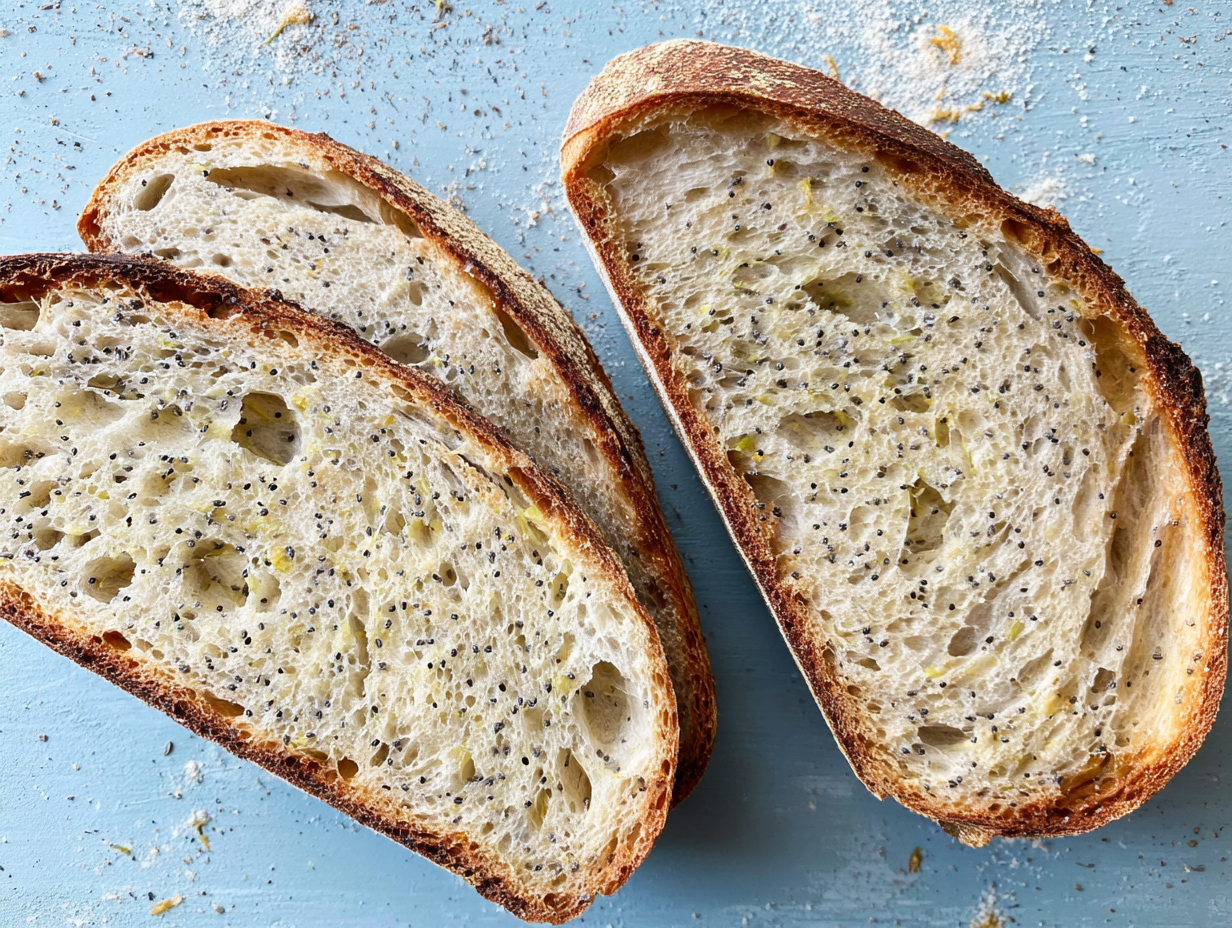
- How do I know when the dough is ready to bake?
The dough is ready when it has doubled in size and has a nice, elastic texture. You can also test by gently poking it – if it springs back slowly, it’s time to bake! - Can I add more lemon zest or poppy seeds?
Of course! Feel free to adjust the amount of lemon zest or poppy seeds to your taste. Just keep in mind that the more zest you add, the more intense the lemon flavor will be.